
 See Our Latest Article on HelloNation

Long drives, flights, train rides, and busy travel days can place unusual demands on the lower back. The main problems are usually prolonged sitting, limited movement, awkward lifting, poor support, and trying to do too much immediately after arriving.
For residents of New Hartford, NY, travel may also involve winter road conditions, bulky seasonal clothing, packed vehicles, or long distances between destinations. A few practical adjustments can reduce strain without requiring special equipment.
Why does travel often trigger lower back pain?
Travel combines several activities that can irritate the muscles, joints, ligaments, or discs of the lower back. Sitting in one position for hours may increase stiffness, especially when the seat encourages slouching or leaves the legs and hips poorly supported. Repeated bending, twisting, and lifting luggage can add another source of stress.
Back pain may also appear because travel interrupts normal routines. A person who usually walks regularly may spend most of a travel day seated. Sleep may be shorter, hydration may be neglected, and heavy bags may be lifted quickly in crowded or inconvenient spaces.
Poor posture is not the only issue. Even a well-designed seat can become uncomfortable if the body stays still for too long. Changing position regularly is generally more useful than trying to hold one “perfect” posture for an entire journey. ([mayoclinic.org](https://www.mayoclinic.org/diseases-conditions/back-pain/symptoms-causes/syc-20369906?utm_source=openai))
How should a car seat be adjusted before a long drive?
The driver’s seat should allow the person to reach the pedals without stretching, keep the knees slightly bent, and maintain a comfortable distance from the steering wheel. The backrest should support the natural curve of the spine rather than forcing the driver to lean far backward or collapse forward.
Useful adjustments include:
- Move the seat close enough that the pedals can be used without straightening the legs completely.
- Keep the hips level with, or slightly higher than, the knees when practical.
- Use the built-in lower-back support if it feels comfortable.
- Keep the steering wheel close enough to avoid reaching forward with rounded shoulders.
- Remove bulky objects from a back pocket, since they can create uneven pressure while sitting.
- Avoid reclining so far that the head must be pushed forward to see the road.
A small rolled towel or compact cushion may help fill a gap in the lower back, but added support should not cause excessive arching or discomfort. The best position is one that permits relaxed breathing, clear visibility, and frequent changes in posture.
For long trips, plan a movement stop roughly every 60 to 90 minutes when possible. Getting out of the vehicle and walking for several minutes is more useful than remaining seated and simply shifting from one side to the other. ([mayoclinic.org](https://www.mayoclinic.org/diseases-conditions/back-pain/symptoms-causes/syc-20369906?utm_source=openai))
What can passengers do during a long car, bus, or train trip?
Passengers have more freedom to change position, but it is still easy to become absorbed in a screen or conversation and remain still for too long.
Try to:
- Place both feet on the floor or on a stable footrest.
- Change leg position periodically without twisting the torso.
- Avoid bending forward over a phone, tablet, or book for extended periods.
- Use a small cushion or rolled garment for lower-back support if needed.
- Stand, walk briefly, or perform gentle ankle and shoulder movements during safe stops.
- Keep frequently used items within easy reach so they do not require repeated twisting.
On a train or bus, only stand or walk when permitted and when conditions are stable. During air travel, moving the ankles and calves while seated can help maintain circulation. On trips lasting more than four hours, prolonged immobility can also increase the risk of blood clots, particularly for people with certain medical risk factors. Anyone with a history of blood clots or related concerns should ask a healthcare professional about individual travel precautions. ([cdc.gov](https://www.cdc.gov/blood-clots/risk-factors/travel.html?utm_source=openai))
How can luggage be lifted without irritating the back?
Luggage is a common source of travel-related back strain because it is often lifted while the body is rushed, rotated, or reaching away from a stable position.
Before lifting, stand close to the bag and make sure the path is clear. Bend through the hips and knees, keep the load near the body, and rise without twisting. If the bag is too heavy or awkward to control, divide the contents, ask for assistance, or use a rolling option.
Avoid lifting a suitcase from the floor directly into a vehicle with one hand while turning the torso. A safer sequence is to place the bag on the edge of the trunk or seat first, then slide or reposition it. When removing a bag, reverse the process rather than pulling it out while reaching and rotating.
Backpacks should be worn over both shoulders, with the load kept relatively light and close to the back. Shoulder bags can create an uneven load, particularly when carried for long walks through terminals, parking areas, or lodging facilities.
Should stretching be done before or during travel?
Gentle movement before and during travel may reduce stiffness, but aggressive stretching is not necessary. The goal is to restore comfortable motion, not force the lower back into a deep bend or twist.
Before leaving, consider several minutes of easy walking followed by controlled movements such as:
- Slow shoulder rolls
- Gentle ankle circles
- Standing hip movements
- A few comfortable sit-to-stand repetitions
- Light walking around the vehicle or terminal
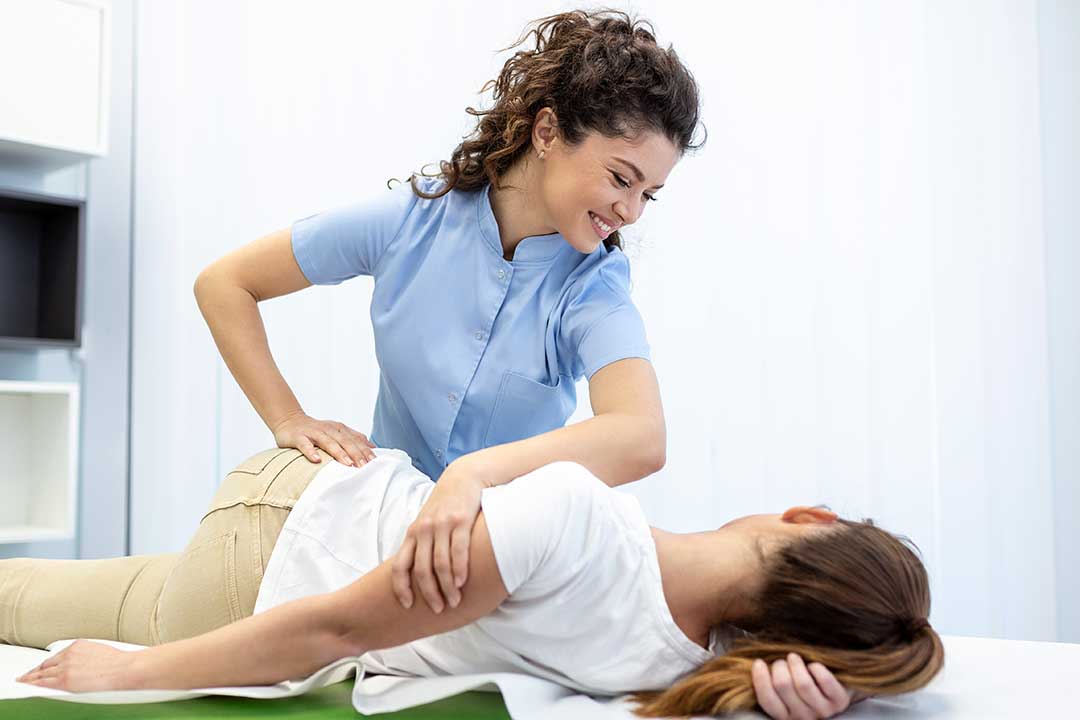
During breaks, walking is often preferable to holding a stretch for a long time. If a stretch causes sharp pain, tingling, numbness, or pain that travels down the leg, stop that movement.
People with an existing back condition should be cautious about starting unfamiliar exercises immediately before a trip. A routine that has already been tolerated is generally more practical than trying a demanding new program on travel day. Regular physical activity outside of travel can also help maintain the strength and mobility needed for sitting, walking, and lifting. ([niams.nih.gov](https://www.niams.nih.gov/health-topics/back-pain?utm_source=openai))
What local travel conditions may make symptoms worse?
Cold weather can make travel routines less forgiving. Heavy coats, boots, and gloves may make it harder to move naturally while loading a vehicle. Snow or ice around a driveway or parking area can increase the risk of slipping while carrying bags. Uneven surfaces and hurried movements may be more problematic than the weight of the luggage itself.
Before winter travel, clear a stable path, use footwear with reliable traction, and avoid carrying more than can be controlled safely. When entering or exiting a vehicle, use the door frame or another stable surface for balance rather than twisting quickly while stepping onto an icy surface.
Seasonal travel can also encourage long periods indoors followed by sudden activity, such as extended walking, skiing, shoveling, or carrying equipment. Gradually increasing activity is safer than expecting the body to handle an abrupt change in workload.
When is travel-related back pain a reason to seek medical care?
Most short-term travel soreness improves with ordinary movement, rest from heavy lifting, and a gradual return to normal activity. However, back pain should not be dismissed when warning signs are present.
Prompt medical evaluation is appropriate for pain accompanied by:
- New weakness, numbness, or tingling in a leg
- Pain traveling below the knee
- Loss of bladder or bowel control
- Numbness around the inner thighs or groin
- Fever, unexplained weight loss, or severe nighttime pain
- Pain after a fall, collision, or other significant injury
- Leg swelling, chest pain, or difficulty breathing after prolonged travel
These symptoms may indicate a condition requiring more than routine travel adjustments. ([mayoclinic.org](https://www.mayoclinic.org/diseases-conditions/back-pain/symptoms-causes/syc-20369906?utm_source=openai))
A comfortable trip usually depends less on finding a perfect seat or a special accessory and more on combining moderate luggage, sensible posture, regular movement, and enough time for safe stops. Those habits are useful whether the journey begins in the winter cold, involves a long highway drive, or simply requires a full day of sitting and walking.
